Immigration, and how does this change the Money system?
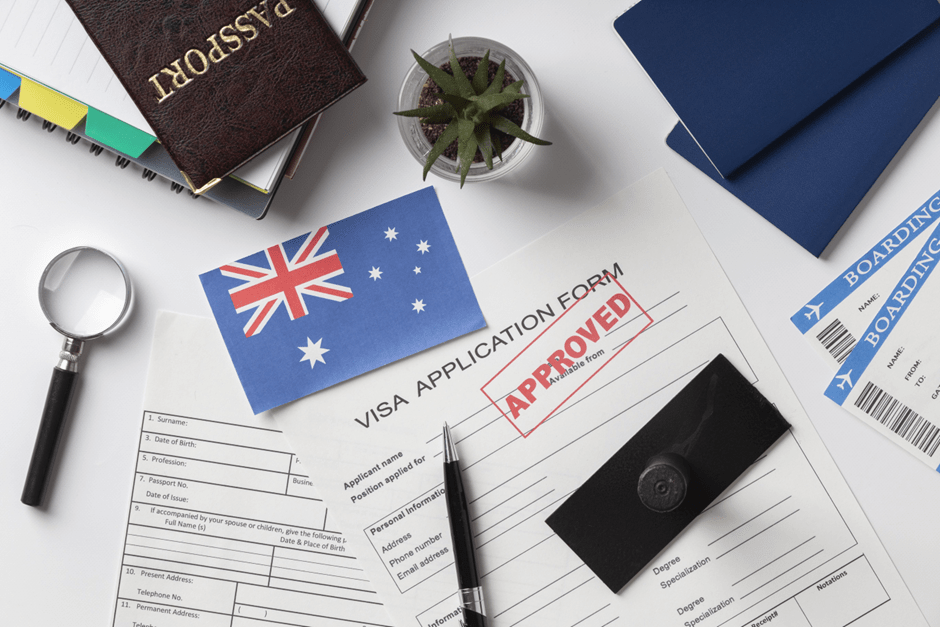
Let’s break down immigration into steps to understand how it effects the Money supply. Immigration is a reference to voluntary economic immigration, not refugee immigration that is humane and a necessary cost to society. While the topic can be divisive because of possible racist overtones, my analysis is a simple economic one of how the Money supply is affected by immigration.
Importing people into Australia does not of itself create Money or increase the value of Money. As an importer of many consumer goods and services, and in the absence of immigrants exporting goods and services, immigration must increase the number of imports, therefore decreasing the Money supply and the value of Money. Australian exports of commodities are not increased by immigration, but imports of necessary goods and services are. So on the face of it, immigration is a negative to the external account.
Importing people also increases the need for local services including health, education, policing, housing and other infrastructure. Immigrants putting pressure on these services have no effect on the Money supply but does have the effect of devaluing the Money supply. Stretching services without increasing the Money supply either decreases the services able to be supplied or increases the cost of that service. Money buys less service at a higher price, even if that Money is paid by the government. Less service for the same or more Money undermines the living standards of existing citizens. On a local level immigration is also a negative.
What if the immigrant brought in their own Money? Bringing in foreign currency and converting that to Australian dollars does increase the Money supply and or the value of Money. In fact, if Australia was to import 1 million people by selling citizenship for $1Million paid to the government, known as the ‘million million’ plan, then we could eliminate our foreign debt. Nice thought, but probably fanciful.
On the normal immigration program the question must be asked whether the amount of Money brought in by immigrants meets the internal and external costs to existing Australian citizens created by that immigration. Whilst individual migrants may bring in and spend more Money than the costs generated, this is certainly not the case across the immigrant population. So, Money brought in by immigrants is not enough to create a positive for immigration by being a net add to the Money supply.
Is any aspect of immigration positive for the Money supply?
Let’s look at some of the possible positives. Immigrants with genuine skills that add to productivity, especially productive goods and services that can be sold offshore, are of huge benefit to Australia, enabling the country to earn more Money. Contributing to increasing the Money supply and its value through productive exports is something Australia desperately needs. In addition, if immigrants provide jobs that allow Australian residents to create productive goods and services to be sold offshore, then by extension those immigrants have contributed to the growth of Money supply and its value.
Sadly, as the vast majority of Australia’s foreign income is from commodities and those export activities receive little contribution from Australia’s immigration program, it cannot be concluded that immigrants add much value to Australia’s Money creation and value through exports.
There is suggestion espoused every day in Australia by media and politicians that Australia has a skilled worker shortage. Deeper analysis reveals a totally different situation. As relatively few immigrants are providing skills into the commodity export sector, then why do we need immigrants providing internal goods and services? It seems absurd that an educated society cannot provide its own goods and services requirements. The truth of the matter is that there is a shortage of wage slaves in certain areas.
We also need immigrant workers to provide for the needs of more immigrants, again an absurd situation. For the government and media to state that Australia has a skill or labour shortage in providing internal services is actually stating that Australia has a significant productivity problem, caused by a lack of innovation and too many unsustainable businesses chasing wage slaves.
However, immigrants do add to Australia’s Money creation by buying houses and taking out mortgages. The great Australian dream must also be the great immigrant dream in the never-ending story of rising Australian housing and land prices. This is a benefit, isn’t it?
Sellers of new and old housing benefit greatly from immigration, as does the whole economy, due to the creation of new Money distributed throughout the economy. However, in the land of the Rent seeker, most of that Money ends up with the 1%ers.
The issue with creating Money from mortgages from overpriced housing is that this sugar hit to the economy, in the absence of creating productive goods and services to be sold offshore, is just another form of Money ponzi. The more immigrants that arrive the more houses need to be sold, with house prices having to ramp up to create new Money to pay for the cost of new immigrants. This is another positive feedback Money loop that eventually has negative consequences because it is unsustainable.
Rule 18 Immigration:
Rule 18: Immigration reduces the Money supply and the value of Money unless it is specifically targeted at productive pursuits. Immigration is beneficial to the Money supply when it’s targeted at skilled immigrants that can produce goods and services that can be sold offshore. Money is created when immigrants borrow to buy houses, but in the absence of productive input ultimately this process only reduces the value of Australia’s Money and the lifestyle of its citizens.
 Money for the Masses, ECONOMICS FOR EVERYONE